


Academic package
Strength of Materials
Also taught as Mechanics of Materials, Mechanics of Solids I and II, Solid Mechanics
Bringing the tools of engineering practice into the classroom: students build a deeper understanding through visualization and simulation, working with the same apps they will later use in practice.
Eagle Eye apps used in this course
Learning resources in this package

The complete set of slides used to teach this course.
Explore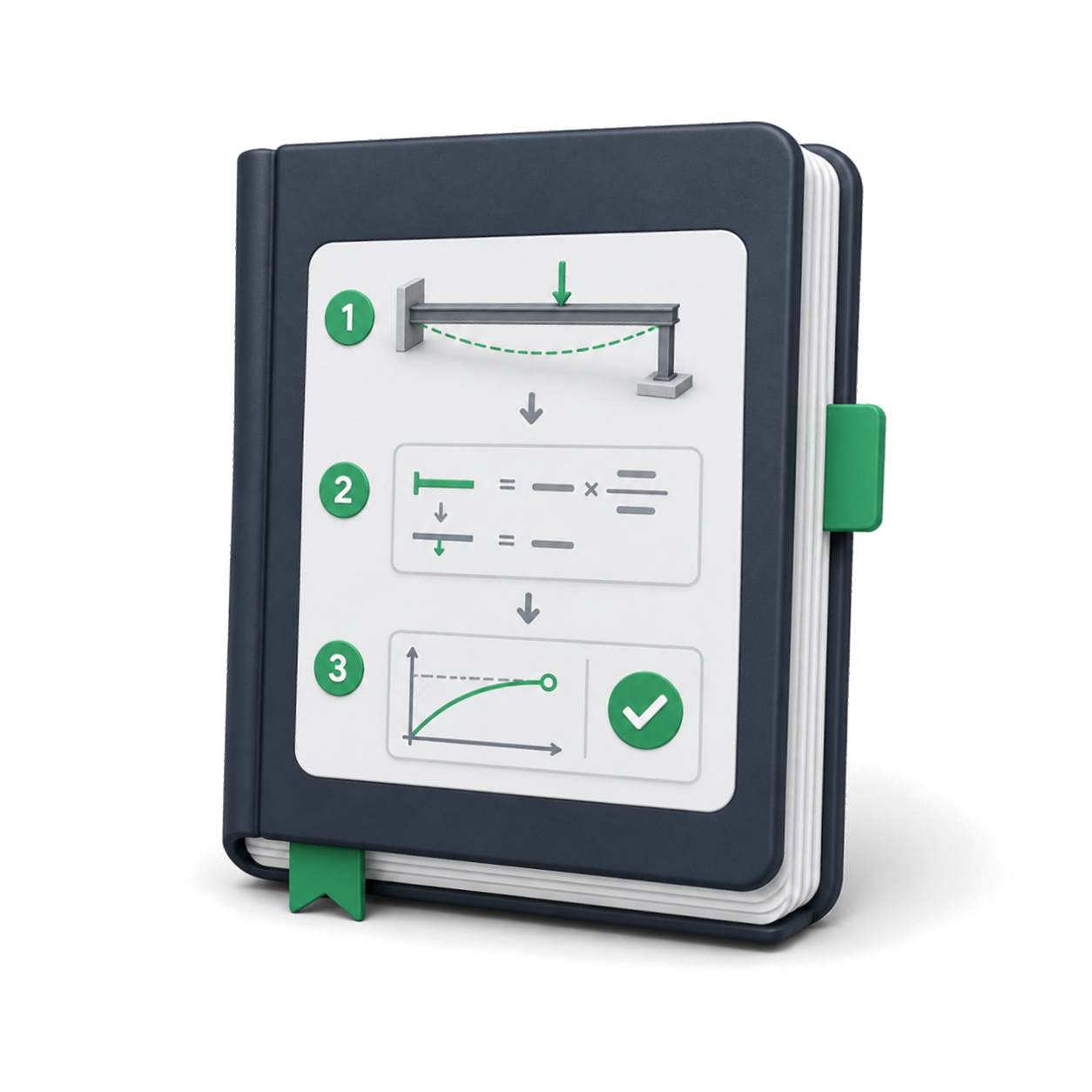
Step-by-step worked examples from input to final results.
Explore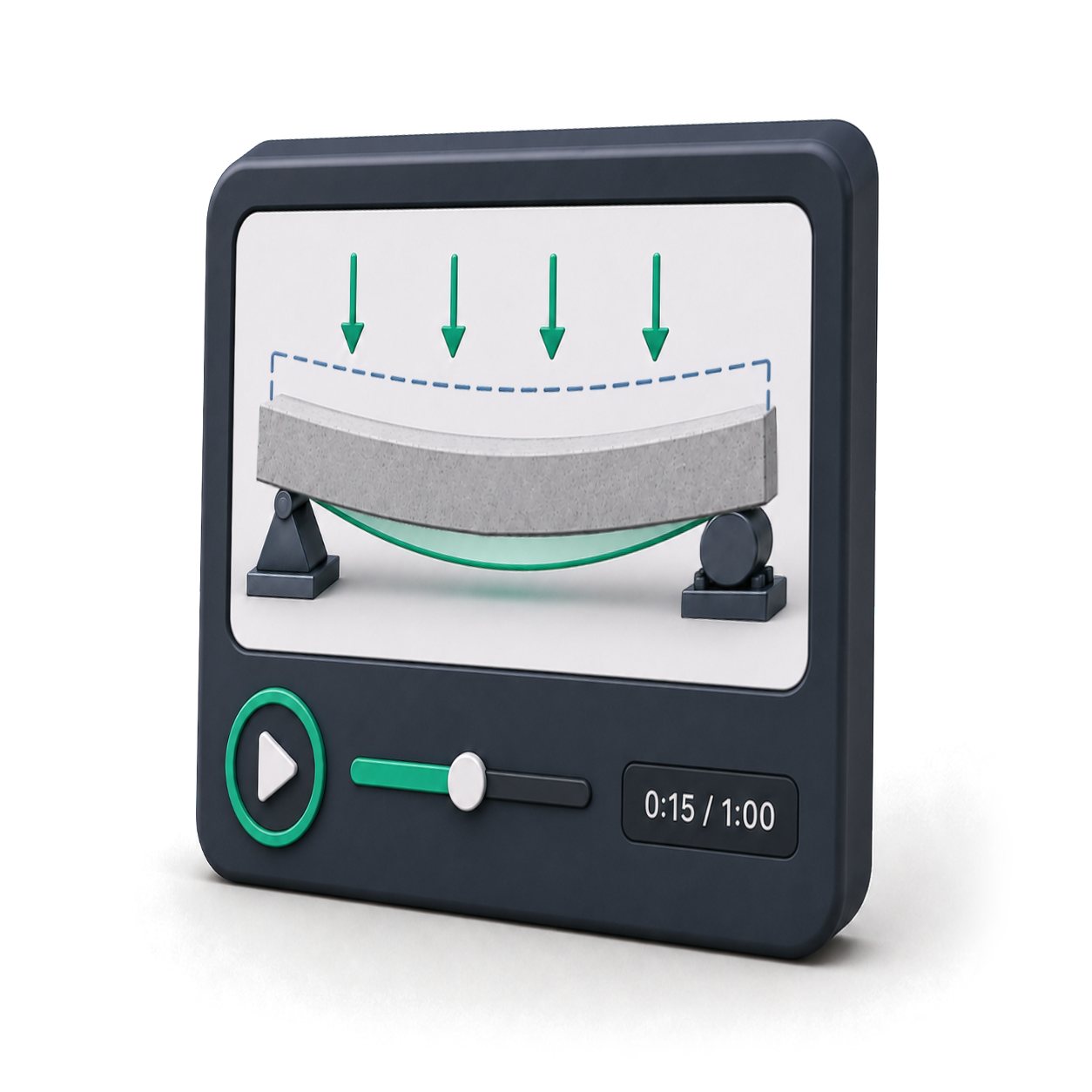
Concepts explained through clear, visual animations.
Explore
Video walkthroughs and tutorials for every lesson.
Coming soon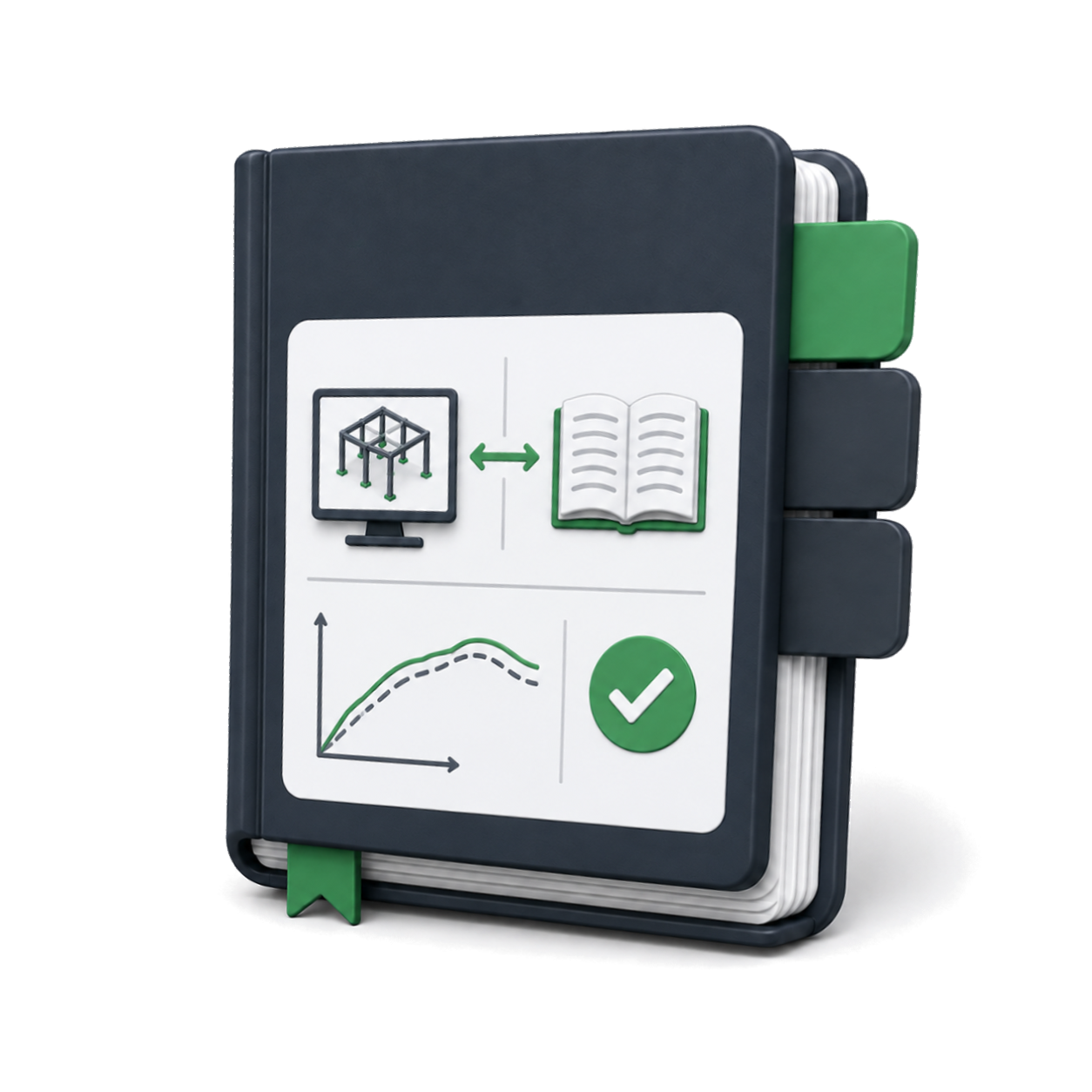
Validation examples confirming accuracy against benchmarks.
Coming soonMuch of this course concerns what happens inside the cross-section, where nothing can be directly seen. Stress distributions, principal directions, and the effect of section shape are usually conveyed through derivations and static figures. The Eagle Eye apps make these quantities visible and adjustable in real time, so the behavior behind each formula can be explored in the lecture and again at home.
In the classroom
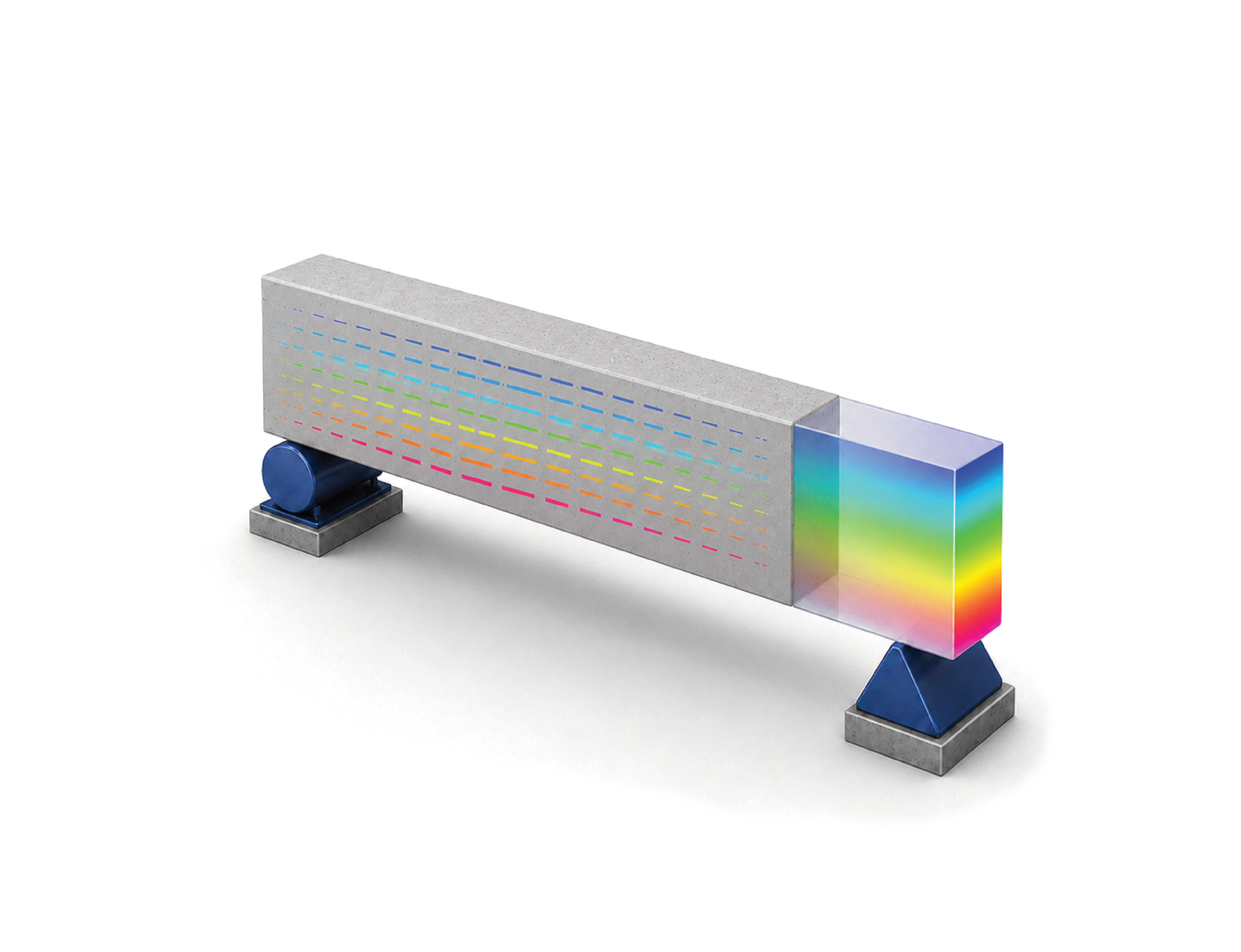
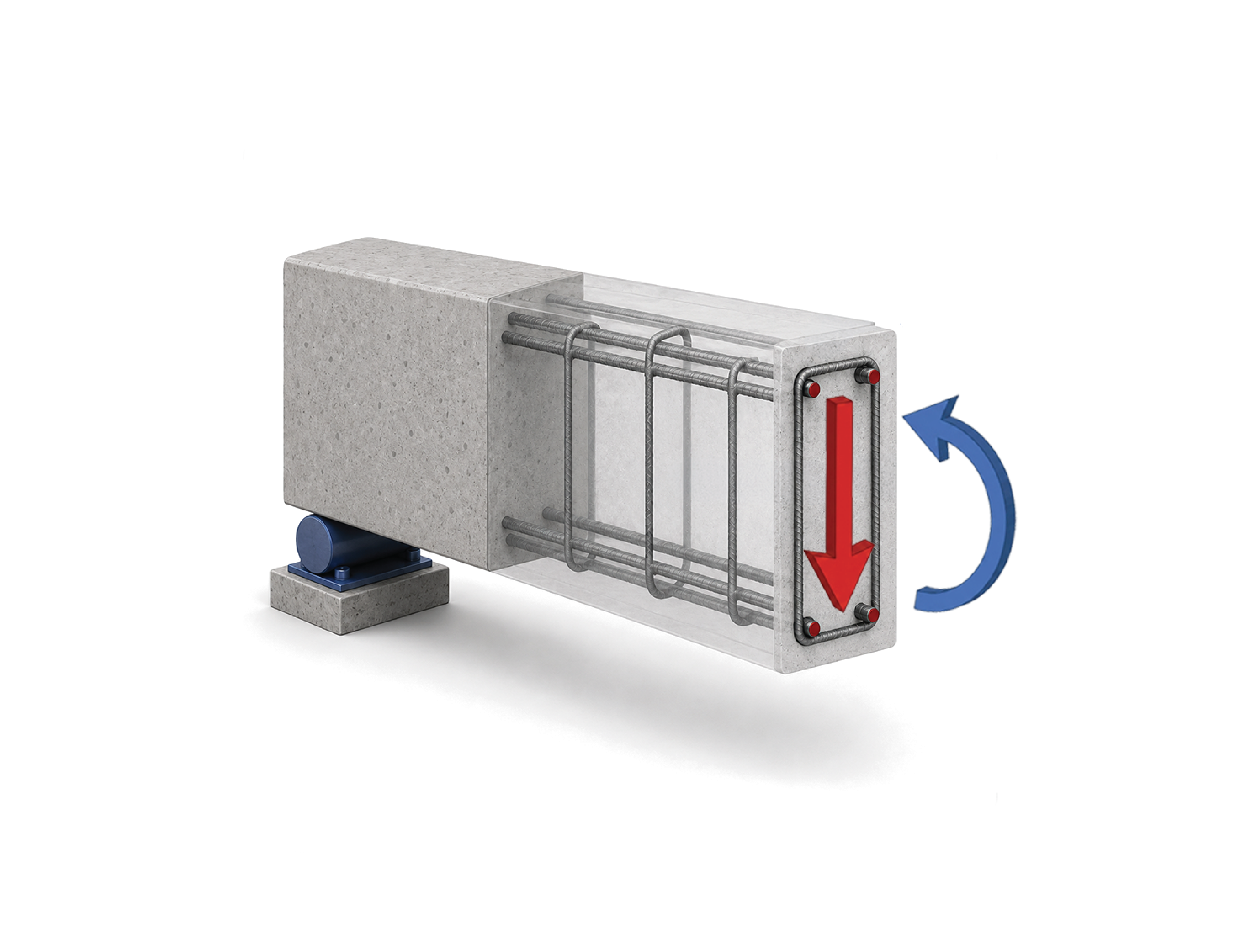
- The shape or dimensions of a section can be changed during the lecture, and the class watches the flexural and shear stress distributions redraw immediately, connecting the geometry to the formulas just derived.
- The point of interest can be moved along the beam and down the section depth, with Mohr’s Circle and the principal stresses following, rather than a single point computed on paper.
- Stress-strain models, elastic, inelastic, brittle and ductile, can be placed side by side when nonlinear material behavior is introduced.
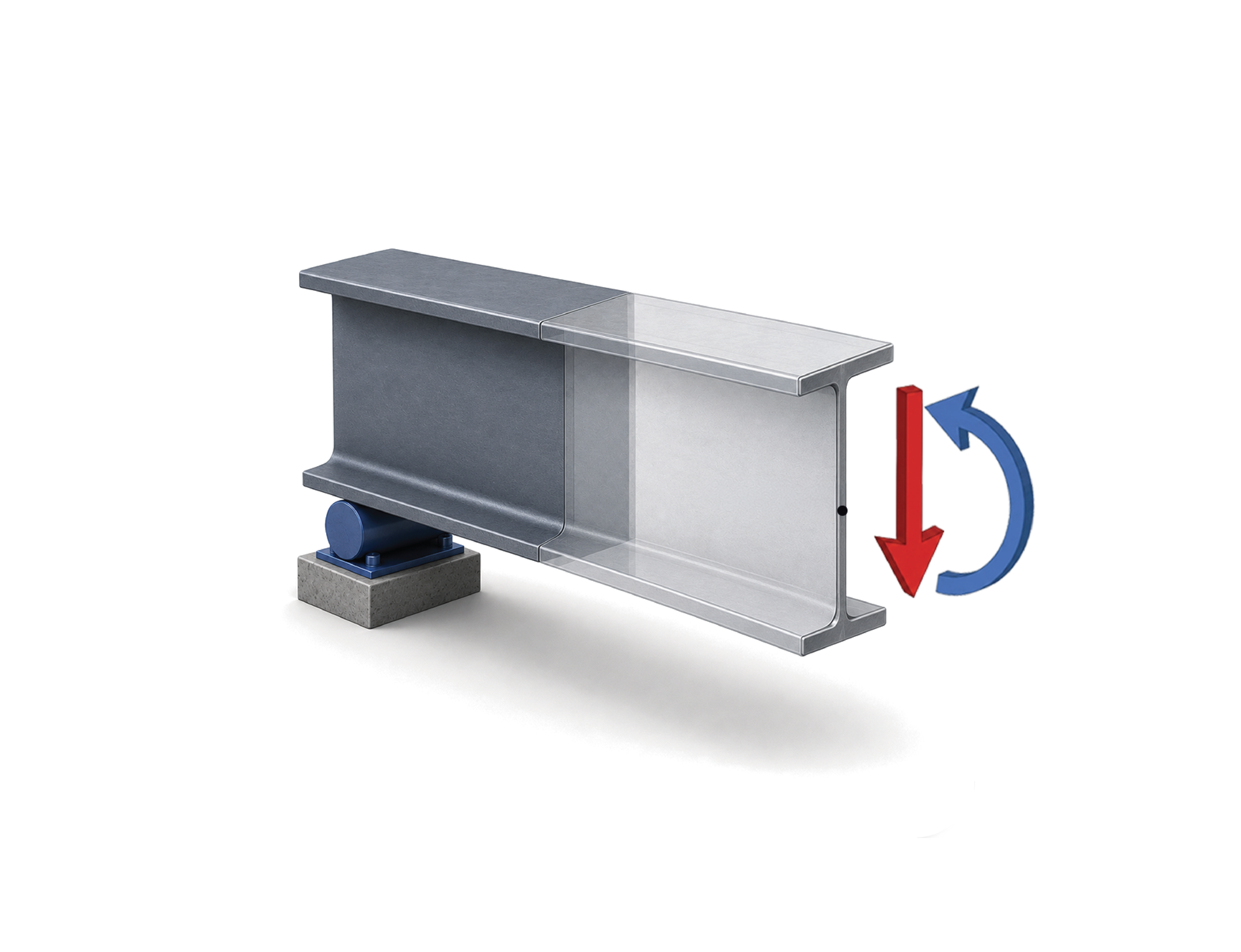
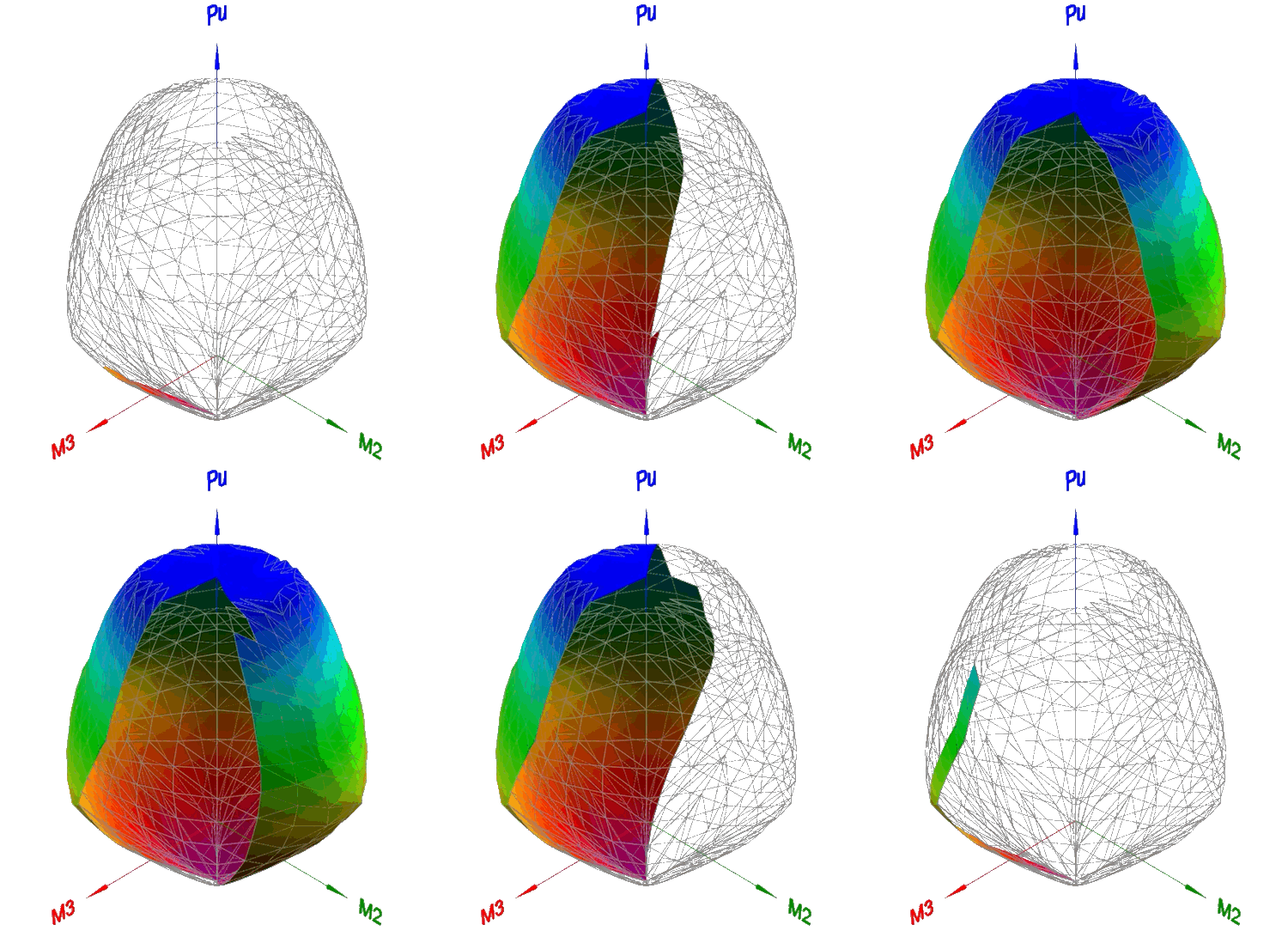
- The loading on an unsymmetrical section can be rotated to show when simple bending stops applying and how the principal axes resolve it.
Learning objectives
Upon completion of this module, students will be able to:
- Visualize in real time how the given inputs, such as material, cross-sectional shape and size, and applied actions, affect the distribution of flexural and shear stresses along the cross-section depth.
- Interactively investigate how the Mohr’s Circle parameters and principal stresses vary along the beam length and along the section depth.
- Understand and differentiate between various stress-strain material behaviors.
- Understand and differentiate between uniaxial and biaxial bending, and between symmetrical and unsymmetrical bending.
- Effectively communicate results through summary reports.
Topics covered
| Cross-section properties | Centroid of area, moment of inertia, polar moment of inertia, radius of gyration, section modulus, product of inertia and principal axes |
| Mohr’s Circle and principal stresses | Stress transformation, principal planes, maximum shear stress |
| Flexural stresses | Distribution along the section depth, the flexure formula, flexural rigidity |
| Shear stresses | Distribution along the section depth, complementary shear |
| Nonlinear material behavior | Stress-strain models, elastic and inelastic response, brittle and ductile materials, confinement |
| Biaxial and unsymmetrical bending | Principal axes, biaxial loading on symmetrical shapes, unsymmetrical sections |
Bring this course package to your class
A dedicated assistant will walk you through the material and set up your course group before the semester begins.
Get in touch