


Academic package
Structural Analysis
Also taught as Theory of Structures I and II, Structural Analysis I and II, Structural Mechanics
Bringing the tools of engineering practice into the classroom: students build a deeper understanding through visualization and simulation, working with the same apps they will later use in practice.
Eagle Eye apps used in this course
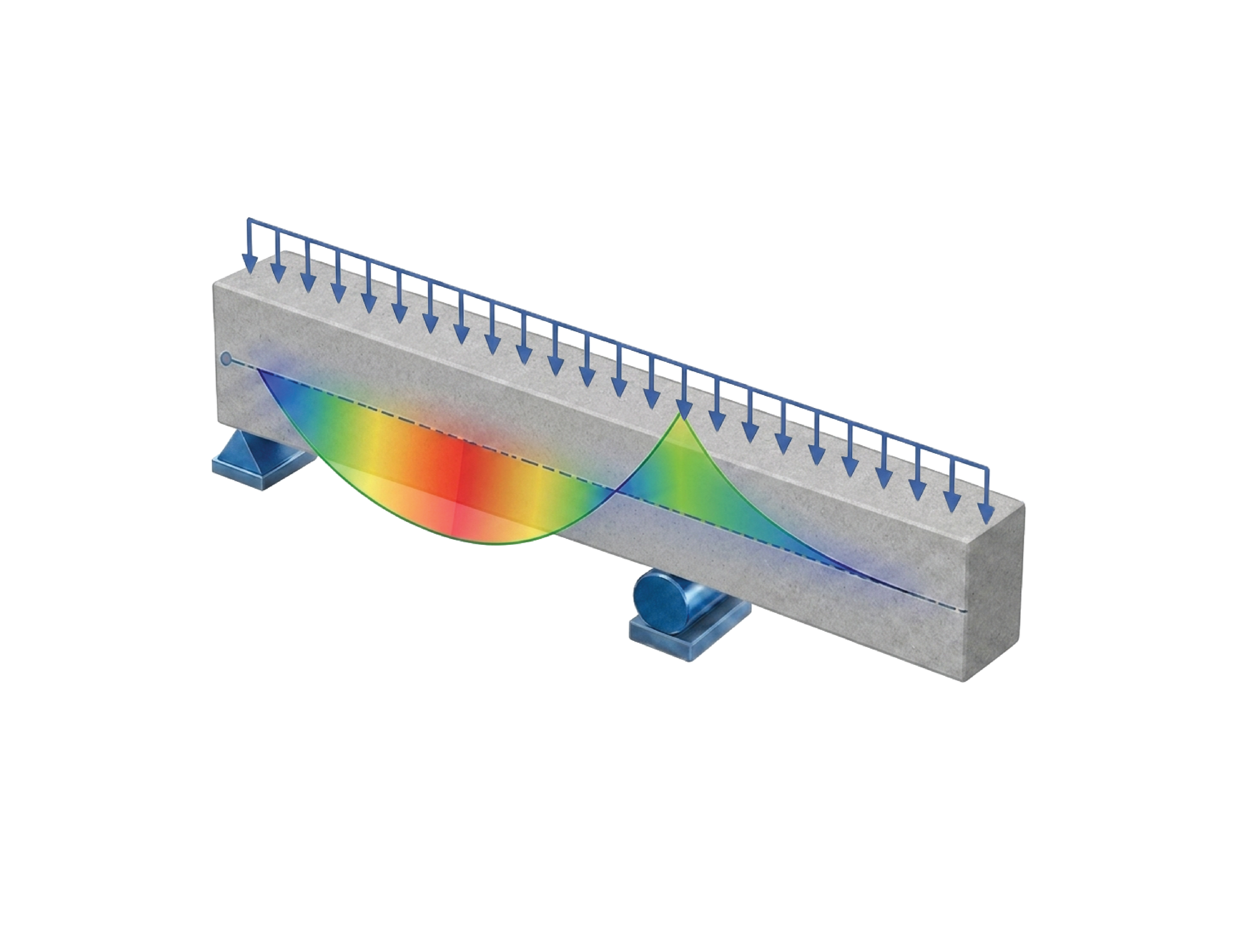
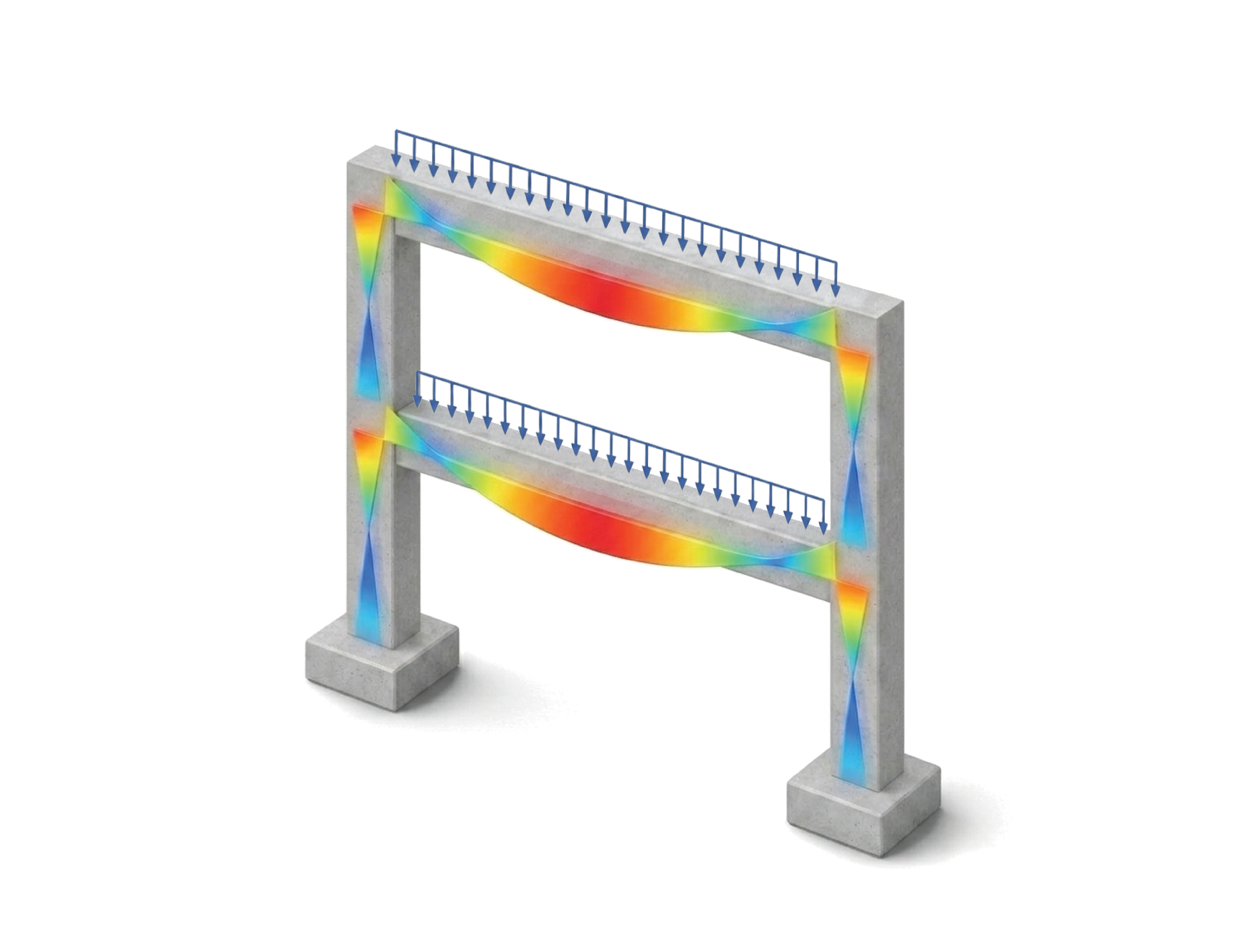
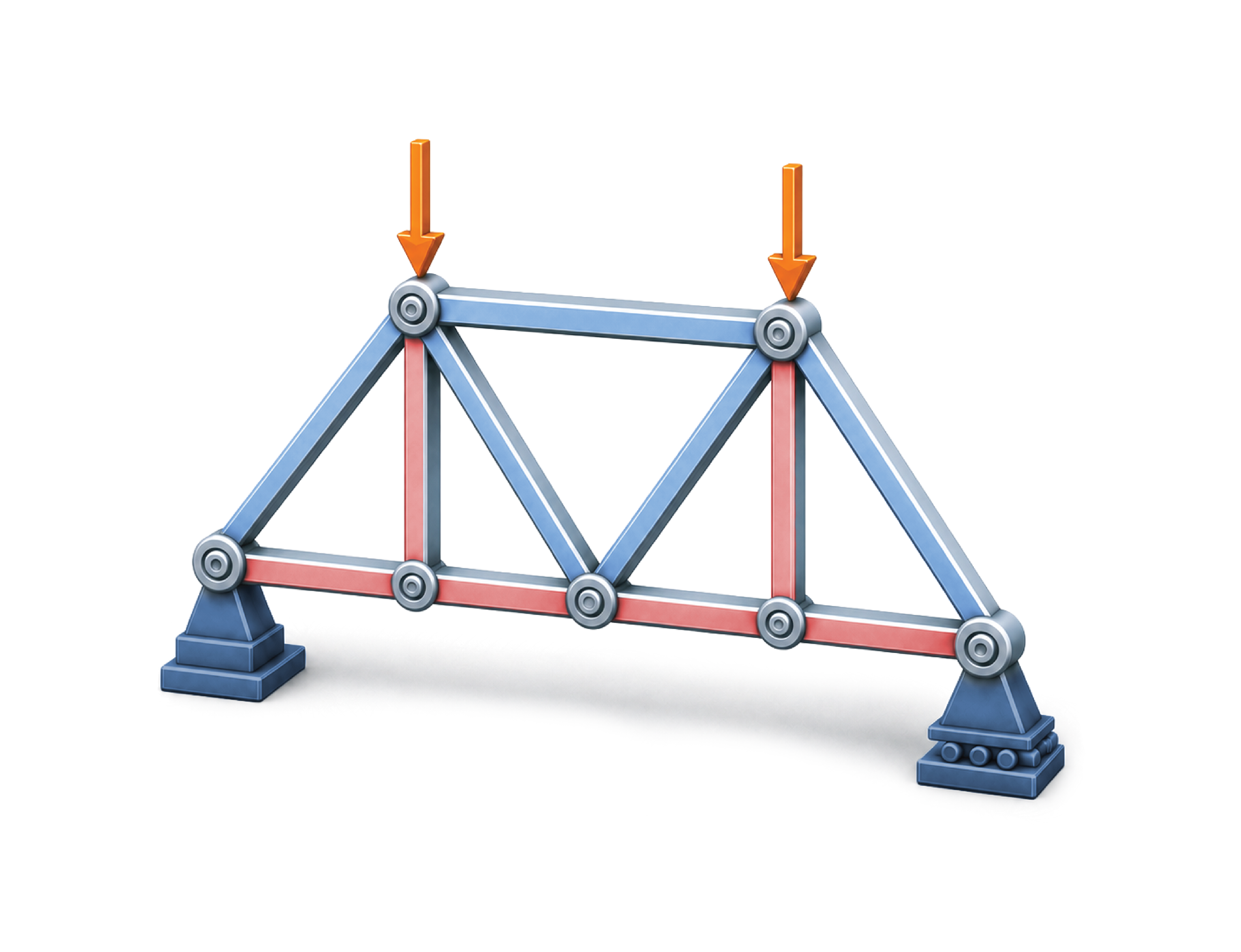


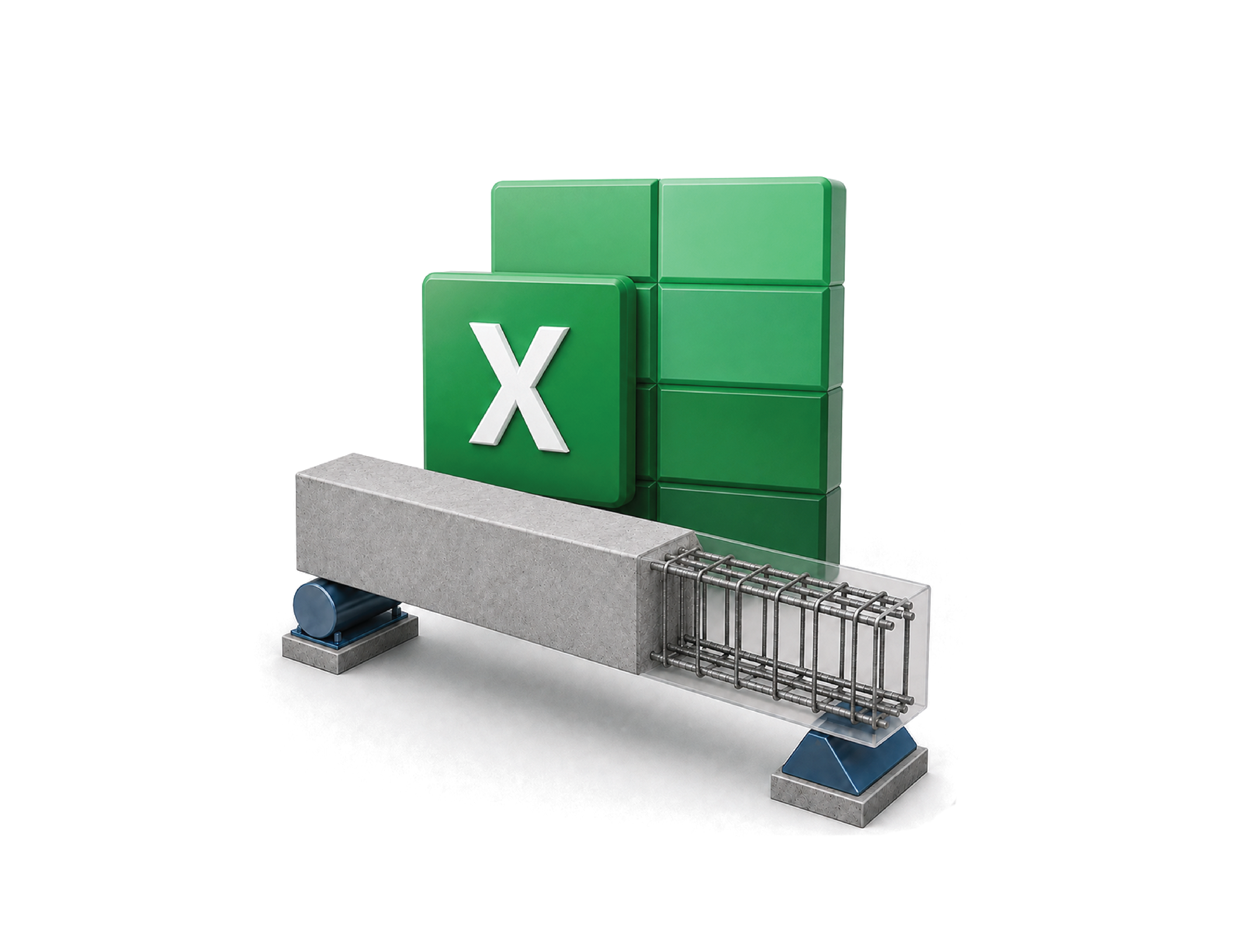
Learning resources in this package

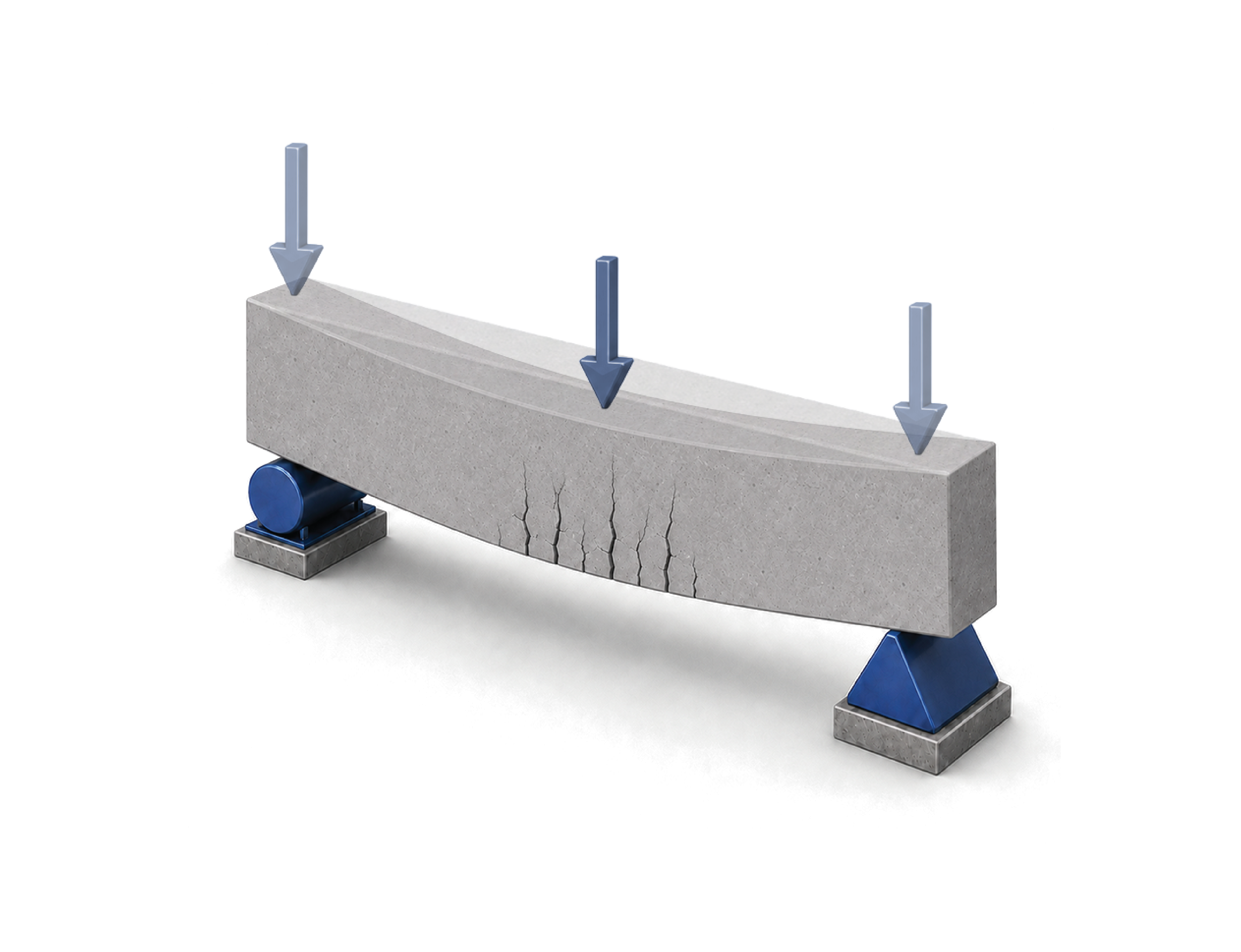
The complete set of slides used to teach this course.
Explore
Step-by-step worked examples from input to final results.
Coming soon
Concepts explained through clear, visual animations.
Coming soon
Video walkthroughs and tutorials for every lesson.
Coming soon
Validation examples confirming accuracy against benchmarks.
Coming soonThe classical methods carry the reasoning of this course, and the matrix methods carry its later practice. By hand, only a few small structures can be solved per topic, and the stiffness method often remains abstract until much later. With the Eagle Eye apps, students solve a structure by hand, check the same structure in seconds, ask what-if questions that a hand solution would not allow, and see the stiffness method at work rather than only its notation.
In the classroom
- A truss solved by the method of joints on the board can be analyzed in the app immediately after, and the class compares the results member by member; the agreement builds confidence in both methods.
- The assembly of element stiffness matrices into the global structural matrix can be shown step by step, with the frame on screen next to the algebra.
- The elastic modulus or the section of one member of an indeterminate frame can be changed, and the class watches the moments redistribute, a behavior that would take a full lecture to compute by hand once.
- A deflection problem can be solved by a classical method and then verified against the app, with any difference in assumptions discussed in class.
Learning objectives
Upon completion of this module, students will be able to:
- Understand the difference between 2D frame members and truss members in terms of degrees of freedom, degree of determinacy, internal forces, and support reactions.
- Visualize in real time how element stiffness matrices are assembled into the global structural stiffness matrix.
- Interactively visualize how the elastic modulus, the cross-sectional shape and size, and the applied actions affect deflections along the member length.
- Compare the results of classical structural analysis methods with those obtained from the direct stiffness method.
- Visualize in real time how the given inputs affect the distribution of shear forces and bending moments along the member length.
Topics covered
| 2D trusses | Method of joints and method of sections, with comparison of results against the matrix methods |
| Direct stiffness method | For beams and 2D frames |
| Shear force and bending moment diagrams | Indeterminate beams and frames, classical methods compared with the matrix method |
| Deflections | Indeterminate beams and frames, classical methods compared with the matrix method |
Bring this course package to your class
A dedicated assistant will walk you through the material and set up your course group before the semester begins.
Get in touch